Expert Shoulder Arthroscopy in Glendale, Cedarburg, Wauwatosa, WI
Shoulder pain, weakness, stiffness, or limited range of motion can interfere with work, sports, and everyday activities. When conservative treatments such as medication, physical therapy, or injections no longer provide relief, shoulder arthroscopy may offer an effective minimally invasive solution. Dr. Jake Bauwens is a fellowship-trained orthopaedic sports medicine surgeon specializing in advanced shoulder arthroscopy for patients throughout Glendale, Cedarburg, Wauwatosa, WI .
Using state-of-the-art arthroscopic techniques, Dr. Bauwens diagnoses and treats a wide range of shoulder conditions through small incisions with specialized instruments and a tiny camera. This minimally invasive approach helps reduce pain, minimize soft tissue disruption, and promote a faster recovery compared to traditional open shoulder surgery. His goal is to restore shoulder function, relieve pain, and help patients safely return to work, athletics, and the activities they enjoy.
- Wauwatosa
- Glendale
- Cedarburg
- Request an Appointment
What is Shoulder Anatomy?
The shoulder joint is made up of a ball and socket joint, where the head of the humerus (upper arm bone) articulates with the socket of the scapula (shoulder blade), which is called the glenoid. The two articulating surfaces of the bones are covered with cartilage, which prevents friction between the moving bones, enabling smooth movement. Tendons and ligaments around the shoulder joint provide strength and stability to the joint.
What is Shoulder Arthroscopy?
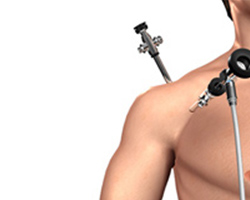
Arthroscopy is a minimally invasive diagnostic and surgical procedure performed for joint problems. Shoulder arthroscopy is performed using a pencil-sized instrument called an arthroscope. The arthroscope consists of a light system and camera that projects images of the surgical site onto a computer screen for your doctor to clearly view. Arthroscopy is used to treat disease conditions and injuries involving the bones, cartilage, tendons, ligaments, and muscles of the shoulder joint.
What are the Indications for Shoulder Arthroscopy?
Shoulder arthroscopy is indicated to treat the following shoulder conditions when conservative treatment such as medication and therapy fail to relieve pain and disability:
- Shoulder impingement
- Rotator cuff tear
- Frozen shoulder or stiffness of the shoulder joint
- Shoulder instability
- Biceps rupture
- Damaged cartilage or ligaments
- Bone spurs or bony projections
- Arthritis of the collarbone
What is the Procedure for Shoulder Arthroscopy?
Your surgeon performs shoulder arthroscopy under general or regional anesthesia. You may be positioned lying down on your side with your arm propped up or sitting in a semi-seated position. Sterile fluid is injected into the shoulder joint to expand the surgical area, so your surgeon has a clear view of the damage and room to work. A button-sized hole is made in the shoulder and the arthroscope is inserted. Your surgeon can view images captured by the camera in the arthroscope on a large monitor. Surgical instruments are introduced into the joint through separate small holes to remove and repair the damage to the joint. After surgery, the instruments are removed, and the incisions are closed with stitches or small sterile bandage strips.
What Does Postoperative Care for Shoulder Arthroscopy Involve?
After the surgery, the small surgical wounds take a few days to heal and the surgical dressing is replaced by simple Band-Aids. The recovery time depends on the type and extent of the problem for which the procedure was performed. Pain medications are prescribed to keep you comfortable. The arm of the affected shoulder is placed in a sling for a short period. Physical therapy is advised to improve shoulder mobility and strength after the surgery.
What are the Advantages of Shoulder Arthroscopy?
The advantages of arthroscopy compared to open surgery with a large incision include:
- Less pain
- Fewer complications
- Shorter hospital stays
- Faster recovery
What are the Risks and Complications of Shoulder Arthroscopy?
Complications of shoulder arthroscopy include infection, bleeding, damage to nearby nerves or blood vessels, or delayed healing after the surgery. In certain cases, stiffness of the shoulder joint may occur after the surgery. It is important to participate actively in your physical therapy to prevent this from occurring.

Jake D. Bauwens, M.D.
Orthopaedic Sports Medicine Surgeon
Dr. Jake Bauwens is an orthopaedic physician, specializing in sports medicine and sports-related injuries. Dr. Bauwens attended the University of Wisconsin-Madison to complete his Bachelors of Sciences in Biochemistry degree, and Rush University Medical College to complete his medical degree.
Why Choose Dr. Bauwens for Shoulder Arthroscopy in Glendale, Cedarburg, and Wauwatosa, WI?
Dr. Jake Bauwens is a fellowship-trained orthopaedic sports medicine specialist with advanced expertise in arthroscopic shoulder surgery. He provides personalized treatment plans using the latest minimally invasive techniques to diagnose and treat a variety of shoulder conditions while helping patients achieve optimal outcomes.
Patients throughout Glendale, Cedarburg, and Wauwatosa, WI choose Dr. Bauwens because of his:
- Fellowship training in sports medicine
- Expertise in advanced arthroscopic shoulder procedures
- Minimally invasive surgical techniques
- Comprehensive treatment approach
- Experience treating athletes and active individuals
- Personalized care plans
- Commitment to patient education
- Focus on evidence-based treatment
His goal is to help every patient reduce pain, restore shoulder strength and mobility, and return to an active lifestyle through compassionate, individualized orthopaedic care.
Shoulder Arthroscopy FAQs
What is shoulder arthroscopy?
Shoulder arthroscopy is a minimally invasive surgical procedure that uses a small camera (arthroscope) and specialized instruments to diagnose and treat shoulder injuries through small incisions. It is commonly used to treat a variety of conditions affecting the shoulder joint.
What conditions can be treated with shoulder arthroscopy?
Shoulder arthroscopy is commonly used to treat rotator cuff tears, shoulder impingement, shoulder instability, labral tears, biceps tendon injuries, frozen shoulder, damaged cartilage, bone spurs, and certain forms of arthritis when conservative treatment has not provided relief.
Is shoulder arthroscopy performed as an outpatient procedure?
Yes. Most shoulder arthroscopy procedures are performed on an outpatient basis, allowing patients to return home the same day.
How long does shoulder arthroscopy take?
Most shoulder arthroscopy procedures take between 30 minutes and two hours, depending on the condition being treated and whether multiple repairs are performed during the procedure.
What are the benefits of arthroscopic shoulder surgery?
Compared with traditional open surgery, shoulder arthroscopy generally offers smaller incisions, less postoperative pain, reduced soft tissue damage, lower complication rates, shorter recovery times, and faster return to daily activities.
Will I need physical therapy?
Yes. Physical therapy plays an important role in recovery by helping restore shoulder strength, flexibility, stability, and range of motion following surgery.
How long is recovery after shoulder arthroscopy?
Recovery varies depending on the specific procedure performed. Many patients return to light daily activities within a few weeks, while full recovery and return to sports or strenuous activities may take several months.
Schedule a Shoulder Arthroscopy Consultation in Glendale, Cedarburg, Wauwatosa, WI
If shoulder pain, stiffness, instability, or injury is limiting your daily activities, Dr. Jake Bauwens offers advanced shoulder arthroscopy for patients throughout Glendale, Cedarburg, Wauwatosa, WI . From comprehensive evaluation and diagnosis to minimally invasive treatment and personalized rehabilitation, he is dedicated to helping you regain shoulder function and return to an active lifestyle.
Contact our office today to schedule a consultation and learn whether shoulder arthroscopy is the right treatment option for your condition.