
Expert Knee Cartilage Restoration in Glendale, Cedarburg, Wauwatosa, WI
Damaged knee cartilage can lead to persistent pain, swelling, stiffness, and difficulty performing everyday activities or participating in sports. Because cartilage has a limited ability to heal on its own, untreated cartilage injuries may progress over time and increase the risk of developing arthritis. Dr. Jake Bauwens is a fellowship-trained orthopaedic sports medicine surgeon specializing in advanced knee cartilage restoration procedures for patients throughout Glendale, Cedarburg, Wauwatosa, WI . Using the latest minimally invasive arthroscopic techniques and evidence-based cartilage restoration procedures, Dr. Bauwens develops personalized treatment plans to repair damaged cartilage, preserve the natural knee joint, and restore mobility. Whether your cartilage injury resulted from sports, trauma, repetitive use, or a cartilage disorder, his goal is to relieve pain, improve knee function, and help you return to an active lifestyle while protecting the long-term health of your joint.- Wauwatosa
- Glendale
- Cedarburg
- Request an Appointment
What is Knee Cartilage Restoration?
Knee cartilage restoration is a surgical technique to repair damaged articular cartilage in the knee joint by stimulating new growth of cartilage or by transplanting cartilage into areas with defects in order to relieve pain and restore normal function to the knee.
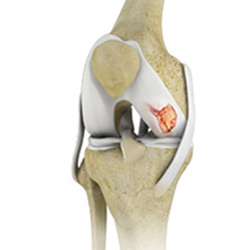
Articular cartilage damage can occur from normal wear and tear of the knee joints, increasing age, injury, or other disease conditions. When cartilage is damaged, it can cause severe pain, inflammation, stiffness, and decreased range of motion of the knee. Because of its avascular nature (absence of blood supply), cartilage cannot repair itself and therefore surgical treatment is usually required to restore cartilage function and prevent progression of the damage into arthritis.
What is Articular Cartilage?
Articular cartilage is the smooth, shiny, white tissue covering the ends of bones that form a joint. Articular cartilage reduces friction when bones glide over each other, making the movements smooth and painless. It also acts as a shock-absorber to help prevent traumatic injuries to the bones.
What are the Indications for Knee Cartilage Restoration?
Knee cartilage restoration is indicated for patients with knee cartilage deterioration or damage as a result of:
- Repetitive use of the knee joint
- Trauma or injury
- Hormonal conditions, such as osteochondritis dissecans (OCD)
- Congenital deformities
What Does the Procedure for Knee Cartilage Restoration Involve?
Most cartilage restoration procedures can be performed arthroscopically, a minimally invasive surgery that involves making 3 small keyhole incisions around the knee joint using an arthroscope, a small flexible tube with a light and video camera at the end that enables your surgeon to view inside of the joints and perform surgery. In certain cases, open surgery may be required to access the affected area requiring longer incisions. Your surgeon will discuss the best surgical options for you based on your condition.
Usually, recovery from an arthroscopic procedure is much faster with minimal pain than a traditional, open surgery.
Some of the most common procedures for knee cartilage restoration include:
- Microfracture: In this method, numerous holes are created in the injured joint surface using a sharp tool. This procedure stimulates a healing response by creating a new blood supply which results in the growth of new cartilage.
- Drilling: In this method, a drilling instrument is used to create holes in the injured joint surface. Drilling holes creates blood supply and stimulates the growth of new cartilage. Although the method is similar to microfracture, it is less precise, and the heat produced during drilling may damage other tissues.
- Abrasion Arthroplasty: This procedure is similar to drilling, but a high-speed metal-like object is used to remove the damaged cartilage instead of drills or wires.
- Osteochondral Autograft Transplantation: Healthy cartilage tissue (graft) is taken from the bone that bears less weight and is transferred to the injured joint place. This method is used for smaller cartilage defects.
- Osteochondral Allograft Transplantation: A cartilage tissue (graft) is taken from a donor and transplanted to the site of the injury. Allograft technique is recommended if a larger part of the cartilage is damaged.
- Autologous Chondrocyte Implantation: In this method, a piece of healthy cartilage from another site is removed using an arthroscopic technique and is cultured in the laboratory. Cultured cells form a larger patch which is then implanted in the damaged part by open surgery.
What Does Postoperative Care for Knee Cartilage Restoration Involve?
In general, postoperative care and recovery after knee cartilage restoration involve the following:
- You will be transferred to the recovery area to be monitored until you are awake from the anesthesia.
- Your nurse will monitor your blood oxygen level and other vital signs as you recover.
- You will be placed on crutches for the first few weeks with instructions on restricted weight-bearing. You are encouraged to walk with assistance as frequently as possible to prevent blood clots.
- Use of a continuous passive motion machine (CPM) at home is advised during the first few weeks to aid in the constant movement of the joint under a controlled range of motion.
- You are advised to keep your leg elevated while resting to prevent swelling and pain.
- You will notice some pain and discomfort in the knee area. Medications will be provided for comfort.
- Physical therapy and range of motion exercises are advised to restore mobility and strengthen the joints and muscles.
- Anti-nausea medications will be prescribed as needed for discomfort associated with anesthesia.
- You should keep your surgical site clean and dry for at least 48 hours. Instructions on surgical site care and bathing will be provided.
- Refrain from smoking as it can negatively affect the healing process.
- Eating a healthy diet rich in vitamin D is strongly advised to promote healing and a faster recovery.
- Refrain from strenuous activities or lifting heavy objects for the first couple of months. Gradual increase in activities over a period of time is recommended.
- You will be able to return to your normal activities in a month or two; however, return to sports may take 4 to 6 months.
- A follow-up appointment will be scheduled to monitor your progress.
What are the Risks and Complications of Knee Cartilage Restoration?
Knee cartilage restoration is a relatively safe procedure; however, as with any surgery, there are risks and complications that could occur, such as:
- Post-operative bleeding
- Blood clots (deep vein thrombosis)
- Infection
- Stiffness of the joint
- Numbness around the incisions
- Injury to vessels, nerves, or healthy cartilage
- Allergic response
- Failure of the graft
- Loosening of the graft

Jake D. Bauwens, M.D.
Orthopaedic Sports Medicine Surgeon
Dr. Jake Bauwens is an orthopaedic physician, specializing in sports medicine and sports-related injuries. Dr. Bauwens attended the University of Wisconsin-Madison to complete his Bachelors of Sciences in Biochemistry degree, and Rush University Medical College to complete his medical degree.
Why Choose Dr. Bauwens for Knee Cartilage Restoration in Glendale, Cedarburg, and Wauwatosa, WI?
Dr. Jake Bauwens is a fellowship-trained orthopaedic sports medicine specialist with advanced expertise in cartilage preservation and minimally invasive knee surgery. He utilizes the latest cartilage restoration techniques to treat focal cartilage defects while helping patients maintain their natural knee joint whenever possible.
Patients throughout Glendale, Cedarburg, and Wauwatosa, WI choose Dr. Bauwens because of his:
- Fellowship training in sports medicine
- Expertise in advanced cartilage restoration procedures
- Extensive experience in arthroscopic knee surgery
- Comprehensive evaluation of cartilage injuries and knee conditions
- Personalized treatment plans based on each patient's goals and activity level
- Experience treating athletes and active individuals
- Commitment to patient education and shared decision-making
- Focus on evidence-based techniques that preserve long-term knee function
His goal is to restore healthy knee function, relieve pain, and help patients safely return to work, sports, and everyday activities while preserving the natural joint whenever possible.
Knee Cartilage Restoration FAQs
What is knee cartilage restoration?
Knee cartilage restoration is a group of surgical procedures designed to repair or replace damaged articular cartilage. These procedures stimulate new cartilage growth or transplant healthy cartilage to damaged areas, helping relieve pain and improve knee function.
Who is a candidate for knee cartilage restoration?
Cartilage restoration may be recommended for patients with isolated cartilage defects caused by sports injuries, trauma, repetitive stress, or conditions such as osteochondritis dissecans (OCD). Dr. Bauwens will evaluate your knee to determine whether cartilage restoration is appropriate for your condition.
Is knee cartilage restoration performed arthroscopically?
Many cartilage restoration procedures can be performed using minimally invasive arthroscopic techniques through small incisions. Some advanced procedures may require a larger incision depending on the size and location of the cartilage defect.
What types of cartilage restoration procedures are available?
Treatment options may include microfracture, osteochondral autograft transplantation (OATS), osteochondral allograft transplantation, autologous chondrocyte implantation (ACI), drilling, or abrasion arthroplasty. Dr. Bauwens will recommend the most appropriate procedure based on your cartilage injury and overall knee health.
How long does recovery take after cartilage restoration?
Recovery depends on the specific procedure performed and the size of the cartilage defect. Many patients return to normal daily activities within one to two months, while returning to sports or high-impact activities may require four to six months or longer.
Will I need physical therapy?
Yes. Physical therapy is an essential part of recovery and helps restore knee strength, flexibility, range of motion, and stability while protecting the healing cartilage.
Can cartilage restoration help prevent arthritis?
Schedule a Knee Cartilage Restoration Consultation in Glendale, Cedarburg, Wauwatosa, WI
If persistent knee pain, cartilage damage, or limited mobility is affecting your quality of life, Dr. Jake Bauwens offers advanced knee cartilage restoration procedures for patients throughout Glendale, Cedarburg, and Wauwatosa, WI. From comprehensive evaluation to personalized surgical treatment and rehabilitation, he is committed to helping you preserve your natural knee joint and return to the activities you enjoy.
Contact our office today to schedule a consultation and learn whether knee cartilage restoration is the right treatment option for your condition.